
Window Cleaning Robot Buying Guide: How to Choose the Right One
The best window robot is not simply the one with the highest suction number. Start with your glass type, window size and how often you plan to use it. Then compare navigation, spray design, safety, station features and how much setup you are willing to do.
For most buyers, compatibility comes first and convenience comes second. If you have ordinary framed windows, you have more freedom to shop by value. If you have frameless, outdoor or very large glass, choose a model built for that exact job.
SmartRobotReviews may earn a commission from qualifying purchases. Prices and availability can change.
Choose the robot around your glass first
Framed, frameless and outdoor windows are not the same job. Make sure the model is suited to your glass, then look at navigation, spray coverage, safety and convenience.
If you clean a lot of glass, a station can be worth paying for. If you only have a few easy panes, a simpler standalone robot usually makes more sense.
7 Things That Matter Before You Buy
Glass compatibility
If you have frameless glass, balconies or exterior-facing panes, check that the exact model is suited to that use. Do not assume every edge sensor means every type of glass is supported.
Safety
Look at the whole safety setup: suction control, backup power, edge sensing and the physical tether. One large suction number does not tell you whether the robot is safer.
Navigation
Better route planning matters more on large panes. A robot that keeps repeating the same area or leaves missed strips becomes frustrating quickly.
Spray and pad design
More nozzles are not automatically better. What matters is whether moisture reaches the glass evenly and the pad stays in good contact across the pane.
Window size
Compact robots can be excellent on normal household windows. Glass walls and floor-to-ceiling panes make route planning, tank size and cable management much more important.
Setup and maintenance
Window robots still need hands-on setup. You place the robot, move it between panes, wash or replace pads and refill cleaning fluid.
Station convenience
A station is most useful when you clean many windows or use the robot often. For occasional cleaning, the extra bulk and cost may not be worth it.
Match the Robot to Your Windows
| Your windows | What matters most | What you can skip | Best next step |
|---|---|---|---|
| Large panes / glass walls | Navigation, spray coverage, tank size, cable and tether management | Paying extra just for compact size | Best for Large Windows → |
| Frameless glass | Clear frameless support, edge sensing and safety backup | Choosing by suction alone | Best for Frameless Windows → |
| Outdoor windows | Supported exterior use, safety tethering and safe access | App extras that do not help the job | Best for Outdoor Windows → |
| Normal home windows | Simple setup, good path planning, reasonable price | A large station if you rarely use it | Best Window Cleaning Robots → |
| Lots of glass cleaned often | Station convenience, navigation and easier pad care | Choosing only by lowest purchase price | WINBOT Models Compared → |
What Is Actually Worth Paying More For?
Worth paying more for
- The right support for your glass type
- Better navigation on large panes
- A stronger overall safety system
- A station if you clean often
- Easy-to-find pads and replacement parts
Do not buy on these alone
- The biggest advertised suction number
- The longest feature list
- More spray nozzles without better coverage
- An app you will barely use
- A flagship station for a few easy windows
For a few easy panes, keep it simple. For floor-to-ceiling glass, many large windows or frequent cleaning, paying more for better navigation and station convenience makes much more sense.
Current Models That Show the Main Buying Choices
These are useful examples of the different ways you can buy today. For a straight ranking, use Best Window Cleaning Robots.
 Premium station system
WINBOT W3 OMNI
Best example of what paying for premium convenience gets you: advanced navigation, triple spray and a self-washing station.
🛒 Check Amazon Better-value station model
WINBOT W2S PRO OMNI
A better example of where many buyers should stop spending: current ECOVACS hardware, a portable station and lower cost than W3.
🛒 Check Amazon Premium without station
WINBOT W2S PRO
A good choice if you want the newer edge-enhanced WINBOT generation but do not want the cost or storage space of a station.
🛒 Check Amazon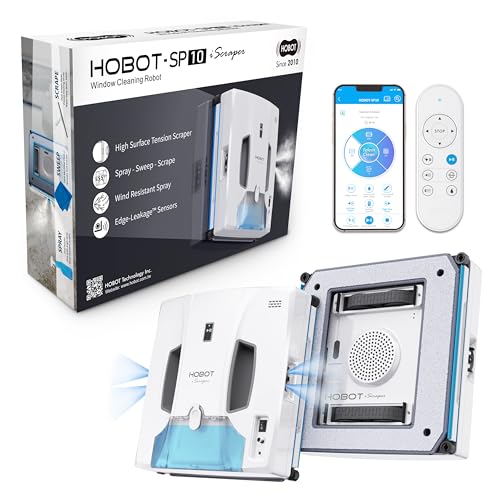 Best example for difficult glass
HOBOT SP10 iScraper
A strong example of why glass compatibility matters. It is clearly listed for framed and frameless glass and for indoor and outdoor use.
🛒 Check Amazon Standalone value
HUTT S55 Pro
A good example of what a lower-cost standalone robot can offer: modern navigation, spray cleaning and easier storage without a station.
🛒 Check Amazon Budget example
MOVA N1
A good example of how much you can now get at the budget end: dual spray, path planning and a multi-layer safety setup at a lower entry price.
🛒 Check AmazonWho Should Buy a Window Cleaning Robot?
Buy one if...
- You have many windows or large panes
- Some glass is awkward to reach safely
- You are happy to move the robot between panes
- You want regular maintenance cleaning to take less effort
Skip one if...
- You only have a few easy-to-clean windows
- You expect whole-home autonomy like a robot vacuum
- Your glass type is not supported by the model
- You mainly need to remove very heavy baked-on grime
Window Cleaning Robot Buying FAQ
How much suction does a window cleaning robot need?
Can window robots clean frameless windows?
Do I need an OMNI-style station?
Are window cleaning robots cordless?
Which window cleaning robot should I buy?
More Window Cleaning Guides
You May Also Like
More Home Robots
SmartRobotReviews may earn a commission from qualifying purchases. Product details, pricing and availability can change.