Large Windows & Glass Walls
The larger the uninterrupted glass area, the more useful systematic robotic cleaning becomes. Current ECOVACS guidance specifically positions window robots for large flat glass, floor-to-ceiling windows and glass panels.
 Michael
• Updated on: Aug 03, 2026
Michael
• Updated on: Aug 03, 2026
Yes—for the right home. Window cleaning robots make the strongest case when you have large panes, floor-to-ceiling glass, hard-to-reach windows or enough glass that manual cleaning has become a recurring chore. For a few small, easy-to-reach windows, they are usually unnecessary.
Affiliate disclosure: As an Amazon Associate I earn from qualifying purchases. SmartRobotReviews may also earn commissions from other retailer links, at no extra cost to you.
A good window cleaning robot is worth buying when it replaces a task you dislike, struggle to reach safely, or need to repeat across a lot of glass. Modern systems combine suction adhesion, route planning, automatic spray and cleaning pads, while premium models add stations, cable management and layered fall protection.
But this is not a robot vacuum for your windows. You still have to place the machine, prepare or change pads, manage the safety system, move it between separate panes and occasionally deal with edges or stubborn dirt manually. If your windows are small and easy to wipe, the economics and setup time are much harder to justify.
The larger the uninterrupted glass area, the more useful systematic robotic cleaning becomes. Current ECOVACS guidance specifically positions window robots for large flat glass, floor-to-ceiling windows and glass panels.
A robot can reduce how much manual wiping you do at awkward heights. That does not eliminate safety procedures, but it can move much of the actual scrubbing work onto the glass-mounted machine.
If cleaning windows is a recurring multi-room project, automation becomes easier to justify. The machine can work on one pane while you handle another task nearby.
These robots make more sense as repeat-maintenance tools than miracle restoration devices. Frequent passes help prevent the job from turning into a major manual clean.
Some current models are positioned beyond traditional windows and can work on compatible flat glass surfaces, giving the purchase more use cases inside the home.
The category is particularly appealing here, but safety matters most. Use only the manufacturer's approved setup, tether or station anchoring, and operating conditions. A robot should not be treated as permission to ignore fall-risk precautions.
Attaching the robot, setting up its safety system, moving it between panes and cleaning the pads can take longer than simply wiping a small number of reachable windows by hand.
Window robots automate the wiping pass, not the entire chore. You still interact with the machine before, between and after panes.
Dried construction residue, heavy mineral buildup, paint, adhesive and other difficult deposits may still require specialized manual treatment. A maintenance robot is not a universal scraper.
Window type, pane size, frames, seals, obstacles and exterior-use conditions matter. Check the exact manufacturer's operating requirements rather than assuming every robot works on every window.
| Factor | What You Gain | What You Still Have to Accept | Our Take |
|---|---|---|---|
| Labor | Automates much of the wiping pass | You still place and move the robot | Major benefit on lots of glass |
| Reach | Can clean glass that is awkward to wipe manually | Safety setup and manufacturer rules remain essential | One of the best reasons to buy |
| Consistency | Systematic route planning can reduce random missed areas | Edges, corners or stubborn spots can still need attention | Good for maintenance |
| Setup | Premium stations can simplify cables and workflow | Not a true set-it-and-forget-it appliance | Depends on your window count |
| Safety tech | Current premium models use suction, sensors, backup power and tethers/station anchoring | No safety system makes careless operation acceptable | Buy reputable, documented systems |
| Cost | Can replace repeated manual effort or some professional-cleaning need | Hard to justify for a handful of easy windows | Use-case dependent |
A robot window cleaner automates movement, spraying and wiping on the pane. It does not generally travel from one separate window to another, open windows for you, replace dirty pads by itself in every system, or inspect every corner after the job.
This distinction decides whether the product feels impressive or disappointing. If you expect it to remove the repetitive wiping from a large glass-cleaning job, the category can be very useful. If you expect robot-vacuum-level whole-home autonomy, current window robots are not there yet.
Modern reputable models use multiple layers of protection, but safety is a system—not a single suction specification.
Robots use suction to stay attached. Current WINBOT models also use automatic air-pressure compensation to respond to leaks or changing attachment conditions.
Current systems can use gravity and edge sensors to maintain stability and identify pane boundaries. This is especially important around frameless glass.
Some current ECOVACS models specify more than 30 minutes of attachment during low-power or blackout conditions, plus safety ropes or station anchoring. Always follow the exact model's instructions.
SRR rule: never choose a window robot purely because it advertises a large suction number. Look for a documented combination of adhesion, sensing, power-loss protection and a physical backup system.
You attach the robot, it navigates and cleans the pane, then you move it. This is the core value proposition of simpler HUTT and HOBOT-style systems.
More advanced route planning, edge detection and controlled spraying can improve consistency and reduce babysitting.
Products such as WINBOT W3 OMNI add a multifunction station and cable-management/cleaning features. You pay more, but the ownership workflow is closer to a system than a standalone gadget.
This is not a ranked Best page. These are examples of three different ways to buy into the category; use our Best Window Cleaning Robots guide for the full ranking.

Best example of why premium window robots cost more: a multifunction station, Win-SLAM 5.0 navigation, triple spray and layered protection.
Check Price on Amazon →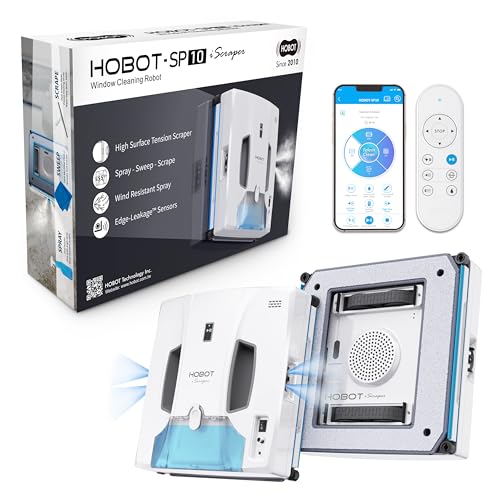
A specialist standalone option whose verified listing explicitly covers framed/frameless glass and indoor/outdoor use.
Check Price on Amazon →
A simpler standalone route with four water sprays, laser sensor detection and 6000Pa claimed suction in its verified listing.
Check Price on Amazon →Yes, on compatible flat glass they can automate spraying, navigation and wiping. Their strongest use case is regular maintenance on larger or harder-to-reach glass rather than replacing every form of manual window cleaning.
They can produce consistent maintenance cleaning across large flat panes, but a person still has an advantage for inspecting corners, treating stubborn deposits and adapting technique to unusual dirt or window structures.
Any glass-mounted device creates a potential fall risk, which is why reputable models use multiple protection layers such as suction monitoring, sensors, backup power and physical tethers or station anchoring. Follow the exact manufacturer's safety instructions every time.
They can be especially useful for apartments with large or difficult-to-reach glass, but the value depends on the window design and whether the model is approved for that setup. Safety requirements are especially important in high-rise use.
Sometimes. Premium models are easier to justify when the extra money buys workflow improvements you will repeatedly use—better navigation, a multifunction station, cable management or more comprehensive protection. If you only need automated wiping, a simpler standalone model may be better value.
They make the most sense as maintenance tools. Using a robot before grime becomes severe generally fits the category better than expecting it to restore heavily neglected glass in one pass.
1 month
1.7M
7 years, 8 months
398K
7 years, 9 months
202K
8 years, 5 months
87.9K
5 years, 3 months
87.8K
4 years, 3 months
65.3K