
Automatic Litter Box Buying Guide: How to Choose the Right One
Choose for your cat first, then for the features. A good automatic litter box needs to be safe, roomy enough, easy for your cat to enter and realistic for you to clean.
For most homes, the biggest decisions are open-top vs enclosed, usable interior space, waste-drawer capacity, litter compatibility and how much maintenance you are willing to do.
Start With These 3 Main Litter Box Pages
Match the machine to the cat
Open-top is usually easier for large, cautious and older cats. Enclosed usually does a better job containing litter and odor.
For several cats, prioritize drawer capacity, reliable sensing and easy cleaning over flashy app features.
How Automatic Litter Boxes Work
Most automatic litter boxes wait until the cat leaves, pause for a set delay, then rotate, rake or sift the litter. Waste is separated from clean litter and moved into a drawer or bag.
1. Safety Comes First
Do not buy an automatic litter box because the listing says “smart sensors.” Look for clear information about how it detects a cat and how the machine stops if the cat comes back during a cycle.
| Safety Feature | What It Does | Why It Matters |
|---|---|---|
| Weight sensing | Detects a cat inside or on the machine | Helps stop cleaning while occupied |
| Proximity sensing | Detects movement near the opening | Adds protection if the cat approaches mid-cycle |
| Motor resistance stop | Stops when something blocks movement | Reduces obstruction risk |
| Manual / kitten mode | Keeps automatic cycling off | Important below the minimum supported weight |
Keep automatic cycling off until the kitten is safely above the supported weight.
For a deeper comparison, see Safest Automatic Litter Boxes.
2. Match the Box to Your Cat's Size and Mobility
Outside dimensions are not enough. A machine can look huge but still have a cramped usable litter area. Check entry size, floor space and turning room.
Large cats
- Prefer open space and a wide entrance
- Check turning room, not just opening width
- Avoid cramped globes
- Use a stable base
Senior cats
- Prioritize a low entry
- Use a stable step if needed
- Avoid steep climbs
- Keep a traditional backup box
See Best Automatic Litter Boxes for Large Cats and Best Automatic Litter Boxes for Senior Cats.
3. Open-Top vs Enclosed
| Category | Open-Top | Enclosed | Better Choice |
|---|---|---|---|
| Cat acceptance | Usually easier | Can feel restrictive | Open-top |
| Large-cat fit | More headroom | Depends on interior | Open-top |
| Odor containment | More exposed | Usually stronger | Enclosed |
| Litter scatter | Usually more | Usually less | Enclosed |
For most cats, open-top is the easier default. If odor and litter scatter matter more and your cat already accepts covered boxes, enclosed can be the better fit.
4. What Actually Controls Odor
No automatic litter box makes odor disappear. The biggest difference comes from how quickly waste is removed, how well the drawer seals and how often you clean the machine.
If smell is your main reason for buying, see Best Automatic Litter Boxes for Odor Control.
5. Check Litter Compatibility Before Buying
Do not assume your current litter will work. Rotating and sifting boxes need clumps that hold together and particles that pass through the screen correctly.
6. Maintenance Matters More Than the App
Automatic does not mean maintenance-free. You still need to empty the drawer, add litter, wipe sensors and deep-clean the unit.
| Task | Typical Rhythm | What Changes It |
|---|---|---|
| Empty waste drawer | Every few days to weekly | Cat count and drawer size |
| Top up litter | Several times per week | Litter type and sifting efficiency |
| Wipe sensors | Weekly | Dust and litter buildup |
| Deep clean | Monthly or as needed | Mess, odor and liner condition |
For a practical schedule, see How Often Should You Clean an Automatic Litter Box?.
7. Work Out the Real Ownership Cost
Purchase price is only the start. Some boxes use proprietary trays, filters, deodorizer cartridges, bags or special litter.
If price is your first concern, see Best Budget Automatic Litter Boxes.
8. App Features Worth Paying For
- Usage history
- Waste-drawer alerts
- Error notifications
- Cycle-delay control
- Multi-cat identification when it works reliably
- Camera feeds
- Extra dashboards
- Voice assistant support
- Decorative lighting
- Features you will rarely open after setup
App data can help you notice changes in litter-box use, but it is not a medical diagnosis.
9. Plan the Transition
If your cat is nervous, see Why Is My Cat Afraid of the Automatic Litter Box?.
Current Models That Show the Main Choices
These are not a second ranking. They are examples of different design directions, and we intentionally use a different mix from the main Best and Budget pages so each guide has a clear job.

Litter-Robot EVO
A current smaller Whisker option that shows what a compact enclosed design looks like for one or two cats.
🛒 Check Amazon
CATLINK Open-X
A current open-top design that shows the easier-access direction for large or enclosure-shy cats.
🛒 Check Amazon
PetSafe ScoopFree SmartSpin
A useful middle-ground example for buyers who prefer a familiar pet-care brand without jumping straight to flagship pricing.
🛒 Check Amazon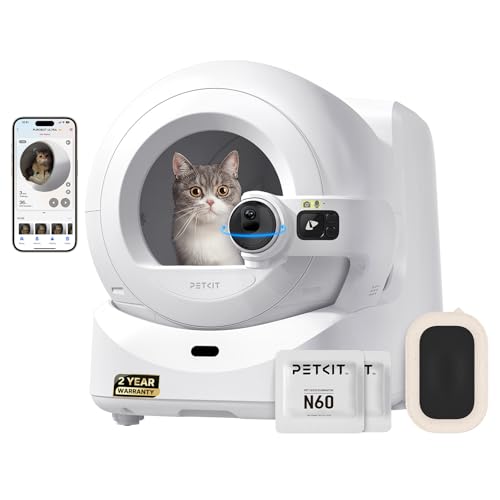
PETKIT Purobot Ultra
Shows the other end of the market: camera monitoring, multi-cat tracking and automatic waste packing for buyers who actually want those features.
🛒 Check AmazonFor ranked recommendations, use Best Automatic Litter Boxes. For the current Whisker family, see Litter-Robot Models Explained.
Quick Decision Guide
Who Should Buy an Automatic Litter Box?
Buy one if...
- You want a cleaner litter bed during the day
- You scoop frequently in a multi-cat home
- You want better waste tracking or drawer alerts
- Your cat is comfortable with the design
- You can maintain and deep-clean the machine
Skip one if...
- Your cat is below the safe minimum weight
- Your cat is extremely fearful of movement or noise
- You expect zero maintenance
- You cannot fit a suitable unit comfortably
- The model has unclear safety information
Troubleshooting & Ownership Help
Related Guides
More Home Robots to Explore
SmartRobotReviews may earn a commission from qualifying purchases. Product specifications, availability and supported litter types can change.