
Litter-Robot 4 is our safest overall pick for most adult cats. It combines multiple occupancy-detection methods, delayed cycling, broad ecosystem support and a mature design that makes it easier to use correctly.
Neakasa M1 Plus is the better choice for large, cautious or mobility-limited cats. Its open-top design reduces confinement and improves visibility, while PETKIT PuraMax 2 is the safer-value option for buyers who want a low entry and published safety-sensor system.
For the current Neakasa lineup, including the upcoming M9 and M1 Lite Plus, see Neakasa Automatic Litter Boxes Compared.
Litter-Robot 4
We selected Litter-Robot 4 because safety is more than a sensor list. A safer ownership experience also depends on clear minimum-weight rules, delayed cycling, stable operation, user alerts, established support and easy access to replacement parts.
No automatic litter box is risk-free. Owners must follow weight limits, supervise transition, keep sensors clean and use manual mode for kittens or unusually small cats.
Quick Picks
 Safest Overall
Litter-Robot 4
Best all-round safety choice for adult cats when used within the manufacturer’s weight and setup rules.
🛒 Check Amazon Best Open-Top
Neakasa M1 Plus
Best for large, cautious and senior cats that benefit from an open, visible entry.
🛒 Check Amazon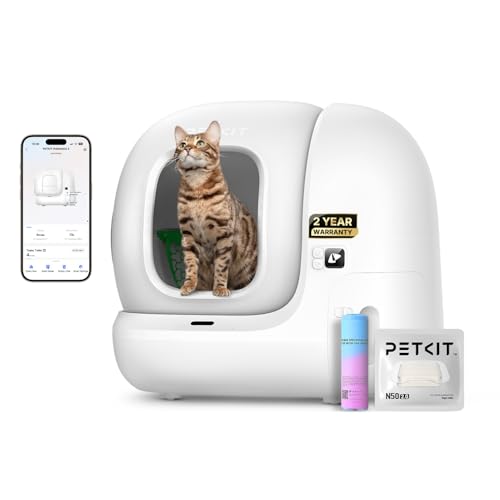 Safest Value Pick
PETKIT PuraMax 2
A lower-cost enclosed option with safety sensors, app control and a low entrance.
🛒 Check Amazon Best for Odor
PetSnowy SNOW+
An enclosed option for odor-sensitive homes with app control and automated waste packing.
🛒 Check AmazonSafety Comparison
| Model | Safety Strength | Entry Style | Best For | Main Caution | Verdict |
|---|---|---|---|---|---|
| Litter-Robot 4 | Multiple detection layers, delayed cycling, mature support ecosystem | Enclosed | Most adult cats | Large or hesitant cats may dislike the globe | Safest overall |
| Litter-Robot 5 | Newer-generation Whisker platform; safety-focused upgrade path | Enclosed | Buyers wanting the newest Litter-Robot generation | Newer platform with less long-term ownership history | New-generation alternative |
| Neakasa M1 Plus | Published 360° safety sensors and open visibility | Open-top | Large, cautious or senior cats | More exposed moving mechanism and less odor sealing | Best open-top |
| PETKIT PuraMax 2 | Published safety sensors, low entry and app control | Enclosed | Value-focused homes | Interior may feel cramped for large cats | Best value |
| PetSnowy SNOW+ | Enclosed operation, app control and waste automation | Highly enclosed | Odor-sensitive homes | Bulky, enclosed and less suitable for hesitant cats | Best for odor |
How We Judge Automatic Litter Box Safety
A long sensor list is not enough. We look at the full ownership system: how the box detects a cat, how it reacts during a cycle, how easy it is to supervise and whether the design suits the cat’s size and mobility.
Occupancy detection
Weight, proximity or motion sensing should prevent cycling while a cat is present.
Immediate interruption
The motor should stop when a cat approaches, re-enters or interferes with the cycle.
Cycle delay
A waiting period after use gives the cat time to leave and reduces surprise.
Manual mode
Essential for kittens, undersized cats and the first days of transition.
Stable construction
The unit should remain steady when a large cat climbs in or onto the entrance.
Support and alerts
Error notifications, parts support and clear instructions reduce misuse and unresolved faults.
1. Litter-Robot 4 — Safest Overall
Litter-Robot 4 is the strongest overall pick because it combines several layers of protection with a mature ownership ecosystem. For most adult cats, that lowers the chance of user error compared with a poorly documented low-cost model.
Its enclosed design is not ideal for every cat. Large, claustrophobic or cautious cats may be more comfortable with an open-top model. Safety includes acceptance: a cat that avoids the box entirely needs a different design.
Why it ranks first
- Multiple occupancy-detection methods
- Delayed cleaning cycle
- App notifications and error alerts
- Established support and replacement ecosystem
- Stable, mature design
- Clearer ownership guidance than obscure brands
Why to skip it
- High purchase price
- Enclosed globe may reduce acceptance
- Large cats may prefer more headroom
- Not appropriate for undersized kittens in auto mode
- Requires sensor cleaning
- Not maintenance-free
Litter-Robot 5 — Newer Generation to Compare
Litter-Robot 5 is the newer Whisker generation and belongs on the shortlist for safety-focused buyers. If you are buying new, it is the logical model to compare with Litter-Robot 4 before deciding.
Litter-Robot 4 remains our established safety pick because it has the longer ownership history and mature support ecosystem. Litter-Robot 5 is the upgrade-path choice for shoppers who prefer the newest platform, but a newer generation does not remove the need to follow minimum-weight rules, supervise transition and keep sensors clean.
2. Neakasa M1 Plus — Safest Open-Top Choice
Neakasa M1 Plus is the better safety fit for cats that dislike enclosed spaces. The open-top design gives the cat a clear exit path and lets owners see the litter bed and the cat’s position more easily.
Its current listing emphasizes 360-degree safety sensors. That published sensor architecture, combined with open access, makes it a strong choice for large cats, seniors and cautious cats.
Before buying, compare it with Neakasa's newer M9 and lower-cost M1 Lite Plus in our Neakasa Automatic Litter Boxes Compared.
Why buy it
- Open entry and clear exit path
- Better visibility for owner and cat
- Published 360° safety sensors
- More headroom for large cats
- Lower confinement risk
- Strong fit for cautious cats
Why skip it
- Less odor containment
- More exposed litter bed
- Potentially more litter scatter
- Large footprint
- Still unsafe for underweight kittens in auto mode
- Requires regular sensor cleaning
3. PETKIT PuraMax 2 — Safest Value Pick
PETKIT PuraMax 2 is the best lower-cost option in this group. Its current listing includes safety sensors, app control and a low entrance, making it more attractive than generic budget boxes with unclear safety documentation.
The lower entry is useful for smaller or older adult cats, but the enclosed interior may feel cramped for larger cats. Buyers should prioritize actual internal fit over the lower purchase price.
Why buy it
- Published safety sensors
- Low entrance
- App alerts and control
- Lower purchase price
- Enclosed waste containment
- Better-known support ecosystem than obscure brands
Why skip it
- Less internal room for large cats
- Enclosed design can reduce acceptance
- Requires compatible litter
- Sensors must be kept clean
- Not a kitten-safe shortcut
- Recurring filters and supplies add cost
4. PetSnowy SNOW+ — Best for Enclosed Odor Control
PetSnowy SNOW+ is the strongest fit for buyers who want an enclosed, automated waste system. Its listing emphasizes app control, automated waste packing and odor-control technology.
It is not the best universal safety choice because the highly enclosed design may be less comfortable for cautious cats. It makes more sense when the cat already accepts covered boxes and odor containment is the priority.
Why buy it
- Highly enclosed waste path
- Automated waste packing
- App control
- Strong odor focus
- Multi-cat positioning
- Less exposed waste handling
Why skip it
- Bulky footprint
- Premium price
- Enclosed layout may deter some cats
- Limited current availability
- More moving and packing components
- Not ideal for mobility-limited cats without easy access
Are Automatic Litter Boxes Safe for Kittens?
Do not use automatic mode for a kitten below the manufacturer’s minimum safe weight. Small kittens may not trigger weight sensors reliably.
Keep the machine powered off or in manual mode, supervise use and operate cleaning cycles only when the kitten is away from the box.
Safety Features Worth Prioritizing
| Feature | Why It Matters | What to Avoid |
|---|---|---|
| Multiple sensor types | Reduces dependence on one detection method | Products that mention only one vague “smart sensor” |
| Cycle interruption | Stops motion when a cat approaches | Systems that cannot clearly explain stop behavior |
| Manual mode | Essential for kittens and transition | Boxes that force automatic operation |
| Clear minimum weight | Helps prevent undersized-cat use | No published threshold |
| Stable base and entry | Reduces tipping or slipping | Lightweight, unstable housings |
| Error alerts | Flags jams and interrupted cycles | Silent failures with no visible warning |
| Accessible support | Helps resolve faults before continued use | Unknown sellers with no parts or support path |
Red Flags to Avoid
Who Should Buy a Safety-Focused Automatic Litter Box?
Buy one if…
- Your cat is an adult above the stated minimum weight.
- You will follow setup and transition instructions.
- You can clean sensors and inspect the unit.
- You want frequent litter-bed cleaning.
- You will keep a backup litter box.
- You are choosing a documented model from an established brand.
Skip one if…
- You have a very small kitten.
- Your cat is terrified by moving equipment.
- You cannot maintain the sensors and waste path.
- You expect automation to remove all supervision.
- The model has unclear safety documentation.
- The cat cannot comfortably enter, turn and exit.
Final Verdict
Litter-Robot 4 is our safest overall automatic litter box for most adult cats. It offers the best balance of layered detection, delayed cycling, ownership guidance and long-term support.
Choose Neakasa M1 Plus for large, senior or cautious cats; PETKIT PuraMax 2 for value; and PetSnowy SNOW+ when odor containment matters most.
No model should be used in automatic mode for an undersized kitten or without following the manufacturer’s safety instructions.
Frequently Asked Questions
Product availability can change; recheck retailer availability before purchase. Safety rankings are based on published product architecture, design, usability and ownership safeguards, not destructive laboratory testing or a guarantee against injury. Always follow manufacturer instructions and minimum-weight rules.