
Robot Lawn Mower Buying Guide: How to Choose the Right Model
The best robot lawn mower is not the model with the largest acreage claim. It is the mower whose navigation system, traction, cutting range, zone support and installation requirements match your actual yard.
For most buyers, the first decision is whether the property suits a wire-free RTK, LiDAR or vision mower—or whether a boundary-wire model remains the safer fit. After that, yard size, slopes, tree cover, narrow passages, disconnected zones and dealer support determine the right upgrade path.
Buy for yard fit, not for the biggest specification sheet
Choose a wire-free mower when you have good positioning conditions, want easier map changes and prefer not to bury a cable. Choose a LiDAR-focused model when tree cover or buildings make satellite reception difficult. Choose a boundary-wire mower when you value mature installation methods, predictable containment and local dealer support.
For steep, rough or expansive yards, prioritize traction, wheel design and capacity headroom before app features. For compact lawns, prioritize installation simplicity, reliable edge behavior and support for narrow passages.
Choose Your Robot Lawn Mower in 60 Seconds
Start with the statement that best describes your property.
Step 1: Measure the Lawn You Actually Need to Mow
Do not use the total lot size. Measure only mowable grass and exclude the house, driveway, beds, patios, ponds and permanently inaccessible areas. Satellite imagery, property plans or a mapping app can provide a useful first estimate, but complex borders are worth checking manually.
Usable grass area
This is the baseline acreage. Add capacity headroom rather than choosing a mower rated exactly for the measured area.
Complexity penalty
Narrow passages, isolated zones, obstacles and irregular boundaries reduce practical mowing efficiency.
Growth and weather penalty
Fast growth, wet periods and missed schedules force the mower to catch up. Extra capacity gives it room to recover.
Recommended Capacity by Yard Type
| Yard Type | Measured Grass Area | Safer Rated Capacity | Why |
|---|---|---|---|
| Simple, flat, open lawn | 0.25 acre | 0.3–0.4 acre | Basic headroom for weather and growth |
| Mixed layout with trees and beds | 0.5 acre | 0.65–0.75 acre | Turning and obstacle avoidance reduce efficiency |
| Sloped or rough property | 0.75 acre | 1.0 acre or more | Traction events and slower travel consume time |
| Multiple zones or long transfer routes | 1 acre | 1.3–1.5 acres | Travel time is not mowing time |
| Estate or highly complex property | 2 acres | 2.5 acres or more | Provides recovery capacity and scheduling flexibility |
Step 3: Evaluate Slopes, Traction and Rough Terrain
Manufacturer slope ratings are maximum claims, not a guarantee that the mower will behave confidently on every incline. Wet grass, loose soil, sharp transitions, holes and side slopes can matter more than the headline percentage.
Maximum slope
Check both the main-lawn rating and any lower limit near boundaries or charging routes.
Drive layout
AWD or 4WD can improve climbing and recovery on uneven terrain, especially with heavier premium mowers.
Wheel design
Wide, aggressive tires can improve grip but may mark soft turf during tight turns.
Ground clearance
Useful for roots, bumps and transitions, but it does not replace careful yard preparation.
For difficult terrain, use the dedicated best robot lawn mowers for slopes guide.
Step 4: Map Zones, Narrow Passages and Disconnected Areas
Two yards with the same acreage can require completely different mowers. A single open rectangle is easy. A property split into side yards, islands, gates and front/back sections is a navigation problem.
Step 5: Compare the Cutting System
Cutting-height range
Match the mower to your grass type and seasonal mowing height. A model designed for short turf may be unsuitable for taller cool-season grass.
Deck width
Wider cutting decks cover large lawns faster, but mower width can become a disadvantage in narrow passages.
Edge performance
Most robot mowers still leave some trimming. Offset decks or built-in edge trimmers can reduce manual work.
Blade type
Small pivoting blades are inexpensive and easy to replace. Heavier systems may handle tougher growth but can add noise and maintenance.
Cutting pattern
Systematic stripes are more efficient and visually consistent than older random mowing patterns.
Grass condition
Robot mowers are maintenance machines. They work best when cutting small amounts frequently rather than reclaiming an overgrown lawn.
Step 6: Check Installation Before You Buy
Wire-free installation checklist
- Does the mower rely on RTK, LiDAR, vision or a hybrid navigation system?
- If RTK is required, where can the antenna or reference station get a clear sky view?
- If LiDAR is used, are there reflective surfaces, dense vegetation or tight geometry that could affect local mapping?
- Can you create and edit maps without professional help?
- Is Wi-Fi or cellular coverage available where the app requires it?
- Can the dock sit on a level, accessible surface with a reliable return route?
Boundary-wire installation checklist
- Can the wire be placed around all edges and obstacles?
- Are there hard surfaces that make burial difficult?
- Who will diagnose and repair a broken wire?
- Will future landscaping require rerouting?
- Is local dealer installation available?
- Does the mower support guide wires or reliable corridor return?
Current Robot Lawn Mower Examples by Buyer Type
These are current Amazon examples that illustrate different buying paths. They are not a universal ranking; choose by property fit.
New navigation context: Roborock RockNeo Q2 LiDAR is a current LiDAR example, but SRR is not adding it as a shopping card until a verified US retail listing and complete Q2 specification set are available. Use the RockNeo Q2 LiDAR vs Q1 comparison for the practical Roborock RTK/VSLAM-vs-LiDAR decision.
 AWD Example
Mammotion LUBA 3 AWD 3000H
Illustrates the premium traction-first approach for slopes, rough ground and buyers who want a wire-free AWD platform.
Best fit: difficult terrain and buyers prioritizing hardware capability.
🛒 Check Amazon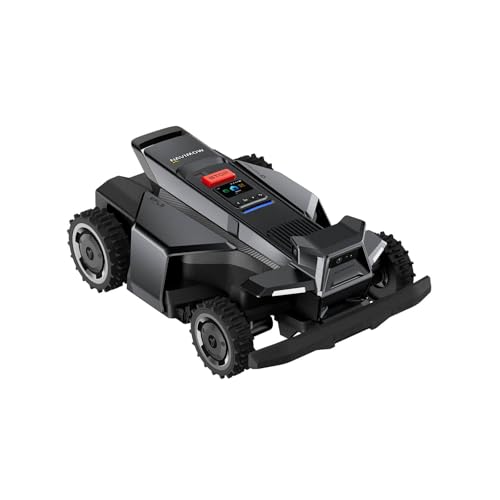 Large-Yard Example
Segway Navimow X450
Represents a premium wire-free, high-capacity approach with 4WD positioning for demanding properties.
Best fit: large lawns, steep sections and buyers comparing Mammotion with Navimow.
🛒 Check Amazon LiDAR Example
Dreame A3 AWD 3500
Shows the LiDAR-first path for buyers concerned about satellite visibility, complex landscaping and premium obstacle handling.
Best fit: tree cover, structured properties and buyers wanting LiDAR mapping.
🛒 Check Amazon Edge-Cutting Example
ECOVACS GOAT A3000 LiDAR PRO
Combines wire-free dual-LiDAR navigation with a built-in edge-focused cutting approach.
Best fit: buyers who prioritize boundary finish and LiDAR-based setup.
🛒 Check Amazon Dealer-Support Example
Husqvarna Automower 440iQ
Represents the established service-network route with wire-free EPOS positioning and large-property capacity.
Best fit: buyers who value installation help, support and long-term brand infrastructure.
🛒 Check AmazonWhich Features Are Worth Paying More For?
| Feature | Worth Paying More When… | Skip the Upgrade When… |
|---|---|---|
| AWD or 4WD | Your lawn has real slopes, rough transitions or traction problems | Your yard is flat and firm |
| LiDAR | Tree cover and buildings make satellite positioning uncertain | Your open yard gives RTK a clear view |
| Higher acreage rating | You need recovery capacity, multiple zones or long daily routes | Your lawn is small and simple |
| Edge trimmer or offset deck | You want to reduce weekly string trimming | You already trim borders manually |
| Cellular connectivity | Wi-Fi does not cover the property and remote alerts matter | The mower remains within reliable Wi-Fi |
| Dealer installation | Your property is complex or you want local service | You are comfortable mapping and troubleshooting |
Long-Term Ownership Costs and Maintenance
The purchase price is only part of robot mower ownership. Budget for replacement blades, wheel cleaning, seasonal storage, firmware support, battery aging and possible installation or repair work.
Weekly
Inspect the deck, remove wet grass buildup, check wheels and confirm the dock area is clear.
Monthly
Inspect blades, charging contacts, sensors and boundary performance. Tighten or replace consumable parts as needed.
Seasonal
Deep-clean the mower, follow battery-storage guidance and protect or remove exposed charging equipment where required.
Who Should Buy a Robot Lawn Mower?
Buy one if…
- You want frequent maintenance mowing rather than occasional long cuts.
- Your lawn can be mapped or wired reliably.
- You are willing to prepare edges, holes and hazards.
- You value time savings more than a perfectly striped manual finish.
- You can maintain blades, wheels, sensors and the charging area.
- You have a secure place for the dock and mower.
Skip one if…
- Your grass is frequently overgrown or unmanaged.
- The yard has unsafe drop-offs, standing water or uncontrolled public access.
- You expect zero trimming and zero maintenance.
- Your navigation conditions are poor and you cannot install a wire.
- You need one machine to handle brush, leaves and lawn renovation.
- Local support and replacement parts are unavailable.
Common Robot Lawn Mower Buying Mistakes
Frequently Asked Questions
Final Buying Recommendation
Start with navigation fit, then buy enough capacity and traction for the hardest part of your yard. Open lawns are strong candidates for wire-free RTK systems. Tree-covered and building-heavy properties should consider LiDAR, hybrid navigation or an established wired installation. Steep and rough yards justify AWD or 4WD. Small, simple lawns usually do not need the most expensive hardware.
The correct mower should reduce weekly work without turning setup, recovery and maintenance into a second hobby.
Troubleshooting & Ownership Help
Use these routes when the problem is installation, terrain, sizing or brand fit rather than the mower itself.
More Home Robots to Explore
Explore other established SmartRobotReviews robot categories.
Manufacturer specifications are presented as claims rather than independent test results. Prices and availability change. SmartRobotReviews may earn a commission from qualifying purchases.